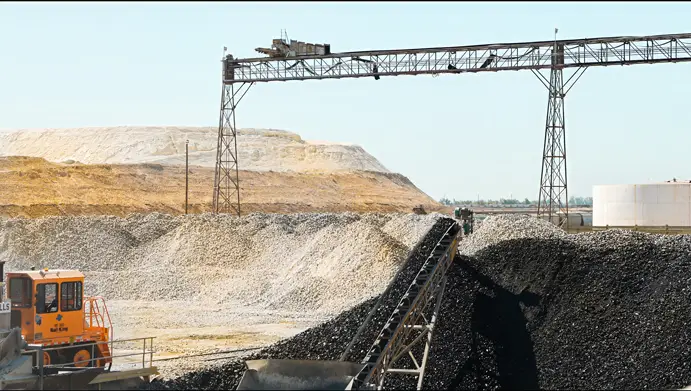
Fueling High-Demand Mining Operations
Fuel is the lifeblood of large-scale mining operations. A well-managed and resilient fuel supply is critical for every blast, haul cycle, and ton of ore. Even brief disruptions can trigger costly chain reactions, including idle equipment and missed production targets.
At high-demand mining sites, fuel is treated as a strategic resource rather than a simple consumable. Fuel supply is planned with the same precision as mine operations and maintenance schedules. High-volume equipment fueling is forecasted, monitored, and continually optimized. Fuel cost per liter is only one metric; the real measure is how effectively fuel translates into operational output.
Top-performing sites enhance reliability, minimize waste, and protect margins by aligning fueling strategies with production goals, even amid volatile fuel prices and unstable market conditions.
Building a Resilient Fuel Supply Chain for Mining
High-demand mining operations often operate in remote areas, far from refineries and coastal hubs. They design the fuel supply chain for resilience, not convenience, mapping the entire journey of off-road diesel—from supplier contracts to transport routes to on-site storage—while identifying potential bottlenecks.
Mines maintain adequate buffer stocks, negotiate flexible supply contracts, and plan for seasonal or weather-related disruptions. Teams account for road closures or storms as part of the planning process. Fueling schedules for high-volume vehicles follow realistic delivery times, keeping bulk tanks from reaching critical levels.
Operations diversify risk by using secondary suppliers, alternative delivery routes, and backup storage, reducing reliance on any single source. Delivery timing also remains strategic, avoiding mine traffic and aligning with shift changes and blasting schedules.
By treating the fuel supply system as a dynamic operational asset, high-demand mines keep equipment running reliably, even under challenging conditions.
Optimizing Fueling Systems for Maximum Mining Efficiency
Fueling systems are a key differentiator between average-performing mines and top-performing operations. Designed for high volume and speed, these systems enable large trucks and support vehicles to refuel safely and efficiently. High-flow dispensers, properly sized hoses, and optimized bay layouts minimize downtime and maximize throughput.
Non-productive time is costly. A hauler delayed even 20 minutes in a crowded fuel bay can significantly reduce payload efficiency. Efficient operations carefully plan traffic flow, including separate entry and exit lanes, clear signage, and sufficient bays for peak periods such as shift changes. Fueling may be centralized, distributed, or a combination of both, using fixed bays alongside mobile fuel trucks to reach remote benches.
Precision is equally critical. Calibrated meters, pumps, and automated transaction logs track every liter of off-road diesel. This supports accurate reconciliation, detects potential leaks or misuse, and ensures confidence in fuel data. Quick, predictable, and accurately measured fueling enhances overall production efficiency.
Maintaining Fuel Quality for Reliable Mining Operations
Off-road diesel is critical for protecting the most valuable mining assets. Poor-quality fuel can damage pumps and injectors and cause unplanned equipment downtime. High-demand sites maintain standards above minimum specifications and implement robust quality control procedures throughout the fuel supply chain.
Industry leaders sample fuel at key points, including upon arrival, before transfer into bulk tanks, and at dispensers. Filtration systems are sized for high-volume fueling and continuously monitored for contamination from water, sediment, or microorganisms. In colder climates, winter blends and cold-flow properties are managed to prevent gelling, while tanks in hot or dusty conditions are protected from excessive heat and debris.
Maintaining high fuel quality enhances engine performance, reduces maintenance frequency, and supports predictable operational schedules. For high-demand mining operations, protecting fuel quality is not optional—it is essential for fleet productivity and cost control.
Fuel Storage and Dispensing Strategies for High-Performance Mines
Fuel storage and dispensing layouts directly impact mine productivity. High-demand operations design tank farms, satellite tanks, and mobile fueling systems strategically to minimize deadhead distances.
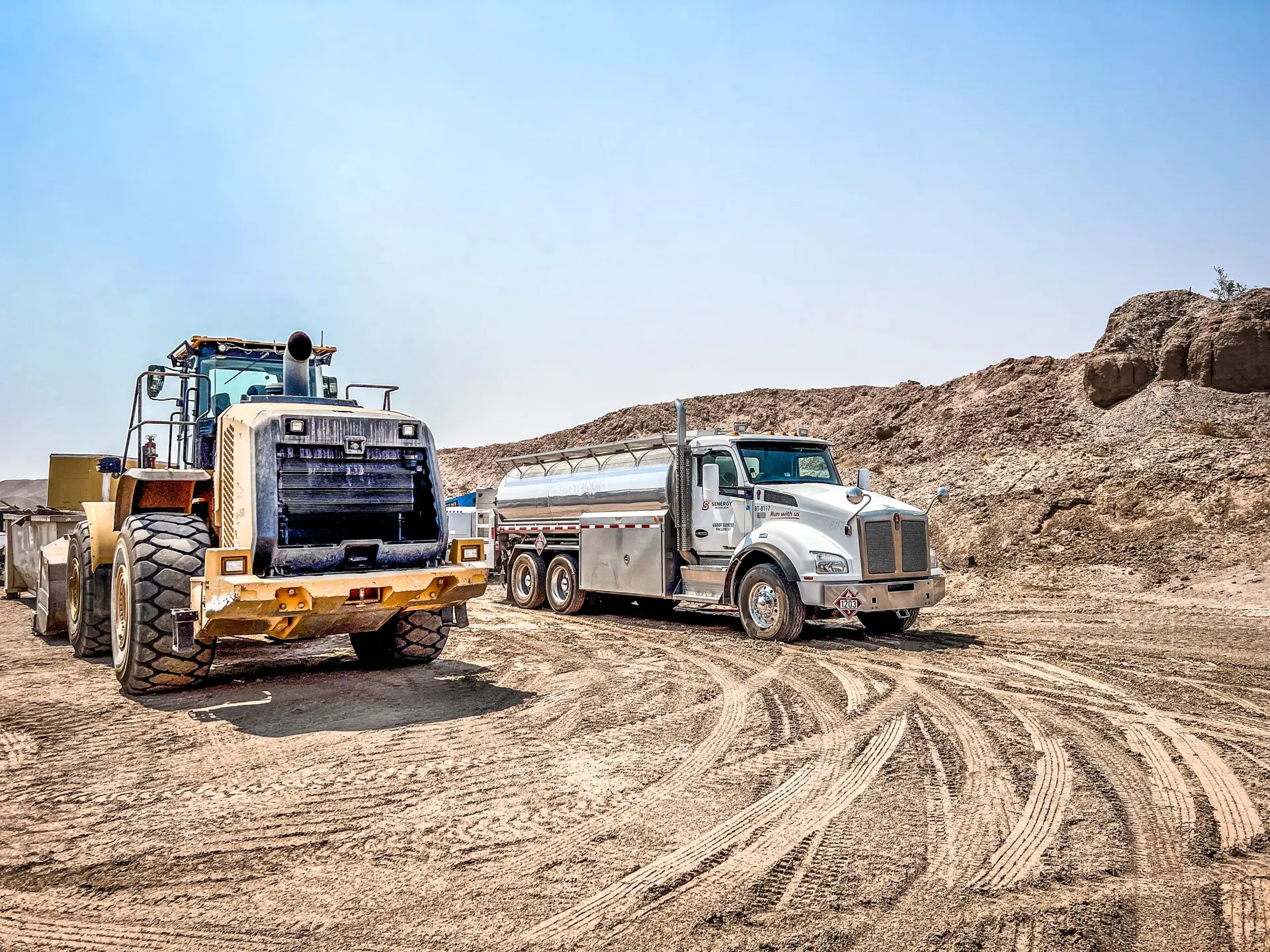
Central tank farms store large volumes of diesel with bunding, fire protection, and monitoring systems. Teams distribute diesel to satellite tanks located near active pits and workshops. Mobile fuel trucks deliver fuel directly to equipment on benches, in dumps, or along remote haul segments.
This approach enables flexible, high-volume fueling without forcing machines to travel to a central bay. “Bringing fuel to the equipment” saves significant time and boosts operational efficiency. Mine infrastructure planning anticipates future growth, including additional tanks, pits, and fuel types.
Fueling functions as a seamless, integrated component of mine operations rather than a production bottleneck.
Harnessing Data to Optimize Mining Fuel Management
Fuel management in modern mining is data-driven. High-demand operations use digital fuel management systems to track every transaction, capturing time, location, volume, and operator automatically.
By combining fuel data with telematics and production statistics, mines can identify patterns previously invisible. This includes trucks with higher fuel consumption per ton, routes with excessive off-road diesel use, and inefficiencies caused by idling. These insights enable targeted improvements, such as route optimization, operator training, speed policy adjustments, or maintenance interventions.
Data also strengthens control over fuel supplies. Reconciliation reports highlight unaccounted losses or potential leaks, while consumption trends show whether fueling practices are boosting performance or shifting bottlenecks. Over time, mines establish benchmarks and key performance indicators (KPIs), such as liters of fuel per ton or vertical meters moved, to set measurable improvement goals.
In high-demand operations, fuel is too valuable to leave to guesswork. Data transforms fuel from a cost that cannot be controlled into a resource that drives efficiency and productivity.
Ensuring Safety in High-Volume Mining Fuel Operations
Fuel is inherently hazardous, and high-volume fueling in active mining environments increases risk. Leading operations design fuel systems with safety as a core priority. Fueling areas maintain clear separation between pedestrians and vehicles, use fire-safe equipment, and enforce strict no-smoking policies.
Operators receive training on fueling procedures, emergency shutdowns, and spill response. Regular practice ensures rapid, effective responses. Mines equip fueling stations with spill kits, fire extinguishers, containment systems, bunds for storage tanks, and leak detection systems.
High-performing mines actively monitor for leaks or incidents, investigate and document events, and remediate affected areas promptly. By treating fuel safety as a core value rather than a regulatory minimum, mines protect workers, maintain operational reliability, and safeguard their assets.
Strategic Fuel Management in Mining
The mining industry is evolving, and so are its fuel strategies. High-demand operations are exploring hybrid vehicles, autonomous haulage, and alternative fuels, requiring systems that handle multiple energy sources with precise storage and safety standards.
Digital integration will continue to expand, coordinating fueling with autonomous trucks and centralized dispatch.
The fundamentals remain: mines that excel plan fuel as a critical system, protect quality, and leverage data for efficiency. Success will depend not on the type of fuel used, but on how strategically the entire fuel supply is managed from mine to port.