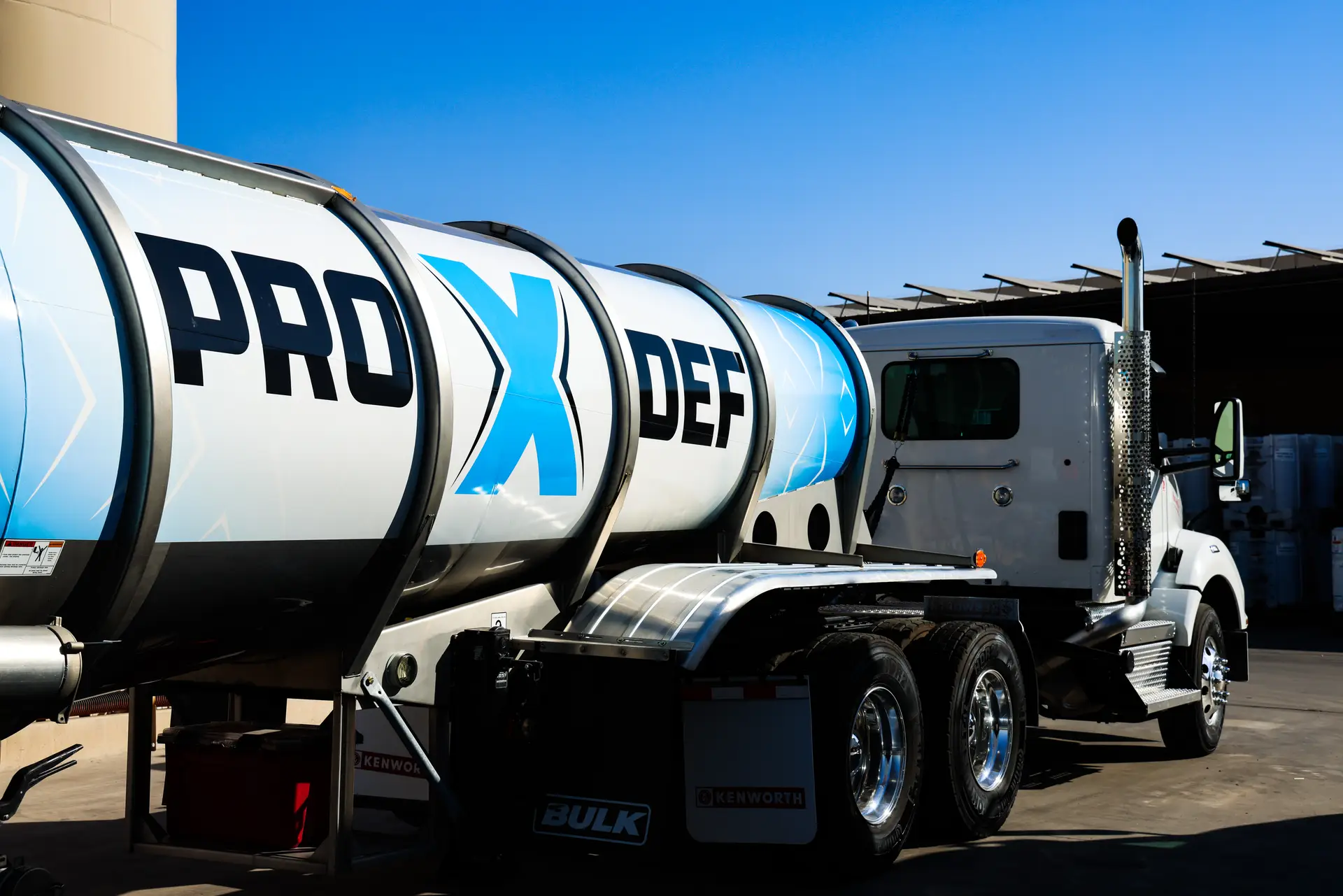
DEF & Diesel: Why They Should Be Delivered Together
Diesel exhaust fluid (DEF) and diesel fuel are both essential to keeping modern diesel fleets operating efficiently. Diesel fuel powers the engine, while DEF helps the engine meet current emissions standards. DEF is a precisely formulated mixture of 32.5% high-purity urea and 67.5% deionized water. It works within Selective Catalytic Reduction (SCR) systems to reduce harmful nitrogen oxide emissions produced by diesel engines.
During diesel combustion, nitrogen oxides (NOx) are created as a byproduct and can be harmful to the environment. DEF is injected into the exhaust stream, where it reacts with these gases and converts them into harmless nitrogen and water vapor. This process allows fleets to meet environmental regulations while maintaining strong engine performance.
Because modern diesel engines and emissions systems are designed to work together, vehicles require both diesel fuel and DEF to operate properly. Without DEF, many modern diesel vehicles will automatically reduce engine power or eventually shut down to prevent emissions violations. As a result, consistent access to both diesel and DEF is essential for maintaining reliable fleet operations.
For many fleet managers, diesel and DEF are managed as a combined operational resource rather than separate supplies. Coordinating delivery and inventory of both products helps reduce downtime and keeps trucks, construction equipment, and generators running efficiently. As sustainability requirements and regulatory standards continue to evolve, managing DEF alongside diesel fuel has become a best practice for long-term fleet performance.
The Operational Benefits of Coordinating Diesel and DEF Deliveries
Time is one of the most valuable resources for fleet operations. When vehicles sit idle during refueling or face supply shortages, productivity is immediately impacted. For this reason, many businesses choose to coordinate diesel and DEF deliveries rather than sourcing each product separately.
When diesel fuel and DEF are delivered together, logistics become significantly simpler. Fleet managers can schedule a single delivery instead of coordinating with multiple vendors and timelines. This streamlined approach reduces administrative effort while ensuring both essential fluids remain in stock.
Coordinated delivery also improves vehicle uptime. Fleets that rely on retail fueling stations often face delays, driver downtime, and inconsistent supply availability. Bulk fuel delivery paired with DEF supply allows vehicles to begin each shift fully fueled and ready for operation. Onsite refueling eliminates unnecessary trips to fueling stations and helps maintain a consistent operating schedule.
Another advantage is more effective supply planning. When diesel and DEF usage are monitored together, suppliers can better predict replenishment needs and schedule deliveries accordingly. This reduces the risk of running out of DEF while diesel tanks remain full—or the reverse situation.
Ultimately, coordinated fuel logistics allow companies to focus on productivity rather than supply management. Integrating diesel and DEF deliveries creates a more reliable fueling program that keeps fleets operating efficiently and minimizes operational disruptions.
How Onsite DEF Storage Improves Fleet Fuel Management
Installing onsite DEF tanks is one of the most effective ways for fleet facilities to manage and control their DEF supply. These storage systems allow businesses to keep DEF readily available for vehicles without relying on retail locations or packaged containers.
Onsite storage improves operational efficiency by enabling DEF to be dispensed as part of daily fueling routines. Drivers can refuel diesel and DEF at the same location, eliminating unnecessary trips and reducing downtime. This streamlined approach significantly improves fueling efficiency, especially for organizations operating large fleets.
Another key advantage of onsite DEF tanks is improved inventory control. Fleet managers gain clear visibility into both fuel and DEF levels, making it easier to monitor usage patterns and accurately forecast future supply needs. This proactive approach reduces the risk of supply shortages and helps maintain consistent fueling schedules.
Onsite storage also supports long-term operational reliability. When stored properly, DEF has a relatively long shelf life, allowing companies to maintain a reserve supply that helps keep operations running even if external supply disruptions occur.
Integrated Fuel Supply Benefits in Environmental
Environmental regulations for diesel engines have become increasingly strict in recent years. Diesel vehicles equipped with Selective Catalytic Reduction (SCR) systems rely on diesel exhaust fluid (DEF) to reduce emissions and comply with these evolving standards.
DEF plays a critical role in converting harmful nitrogen oxide (NOx) emissions into harmless nitrogen and water vapor, significantly reducing the environmental impact of diesel engines. Studies have shown that DEF can reduce NOx emissions by up to 90–95%, allowing fleets to meet regulatory requirements while supporting more sustainable operations.
Coordinated diesel and DEF delivery also helps maintain consistent emissions performance. When a vehicle runs out of DEF, many modern diesel engines automatically reduce power or enter a low-performance mode to prevent emissions violations. This can interrupt operations and create costly delays.
By scheduling diesel and DEF deliveries together, fleets can ensure both fluids are always available when needed. This approach helps prevent compliance issues while keeping vehicles operating at full performance.

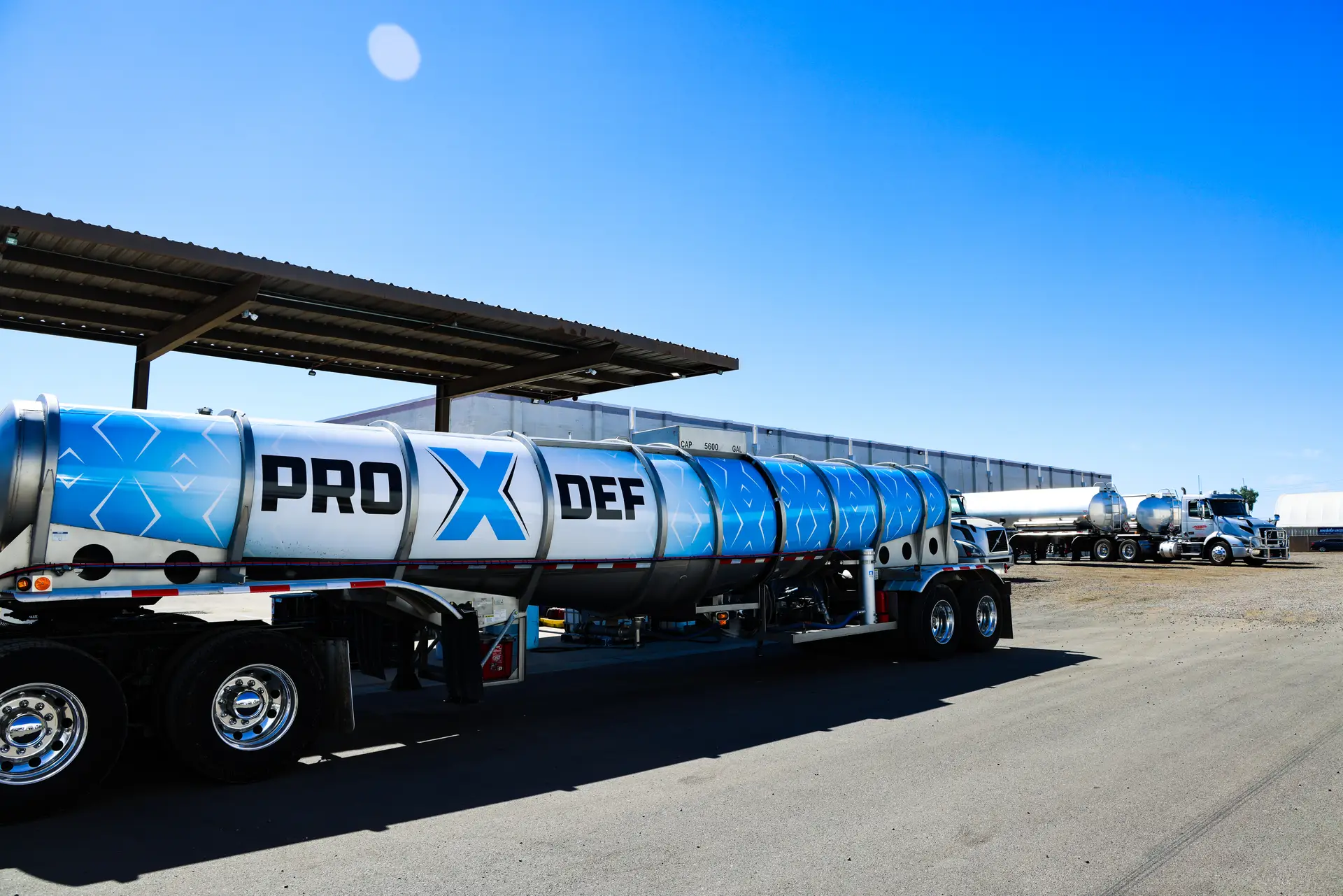
Simplifying Fleet Operations with Integrated Diesel and DEF Supply
Fuel logistics become complicated when fleets rely on multiple suppliers or face inconsistent delivery schedules. Integrating diesel and DEF supply chains simplifies operations and improves fueling efficiency.
A unified fueling approach keeps vehicles stocked with both essential fluids. This reduces operational disruptions and lets fleet managers maintain consistent fueling schedules across multiple locations.
Coordinated supply chains also enhance forecasting. Tracking diesel and DEF usage together gives businesses clear insight into consumption patterns, allowing managers to plan deliveries accurately and prevent shortages or excess inventory.
Centralized fueling systems increase accountability. Refueling vehicles at company-operated stations lets managers monitor fuel usage closely, improving budgeting accuracy and reducing the risk of fuel misuse.
Using Technology to Improve Diesel and DEF Fuel Management
Modern fuel management systems optimize diesel and DEF supply. Advanced monitoring technology lets fleet managers track fuel usage, tank levels, and delivery schedules in real time, keeping inventory at optimal levels.
Fleet operators can connect onsite diesel and DEF tanks to smart monitoring systems that issue automated alerts when inventory drops. These alerts allow deliveries to be scheduled before shortages occur, preventing operational disruptions.
Technology also drives data-informed decision-making. Analyzing fuel consumption trends helps businesses identify inefficiencies and adjust fueling strategies. For example, managers can see which vehicles use more DEF due to driving patterns, load demands, or engine performance.
Digital fueling systems also enhance accountability. Automated records capture when vehicles refuel and how much fuel they use, providing accurate data for budgeting, reporting, and long-term operational planning.
The Future of Fleet Fuel Management
The transportation and logistics industry continues to evolve, and fuel management practices are evolving with it. Many fleets are adopting coordinated diesel and DEF delivery to improve efficiency, reliability, and sustainability.
Integrated fuel supply simplifies logistics by consolidating vendors and delivery schedules, reducing the complexity of fuel management. With bulk diesel delivery, DEF supply, and onsite storage, fleets can maintain a consistent fuel supply while minimizing operational disruptions.
Coordinated delivery also supports environmental compliance. Ensuring vehicles always have adequate DEF helps fleets meet emissions standards while maintaining optimal engine performance.