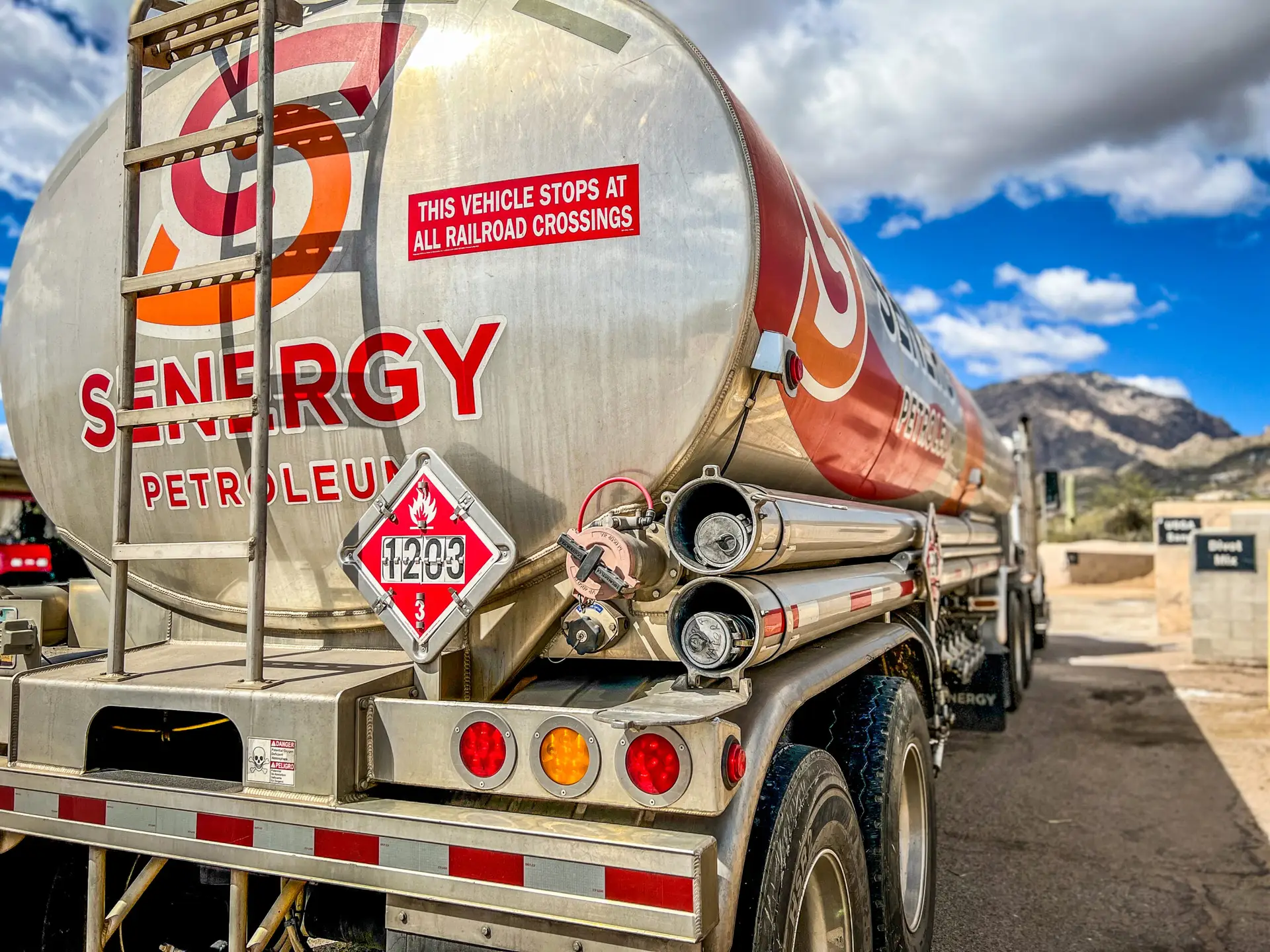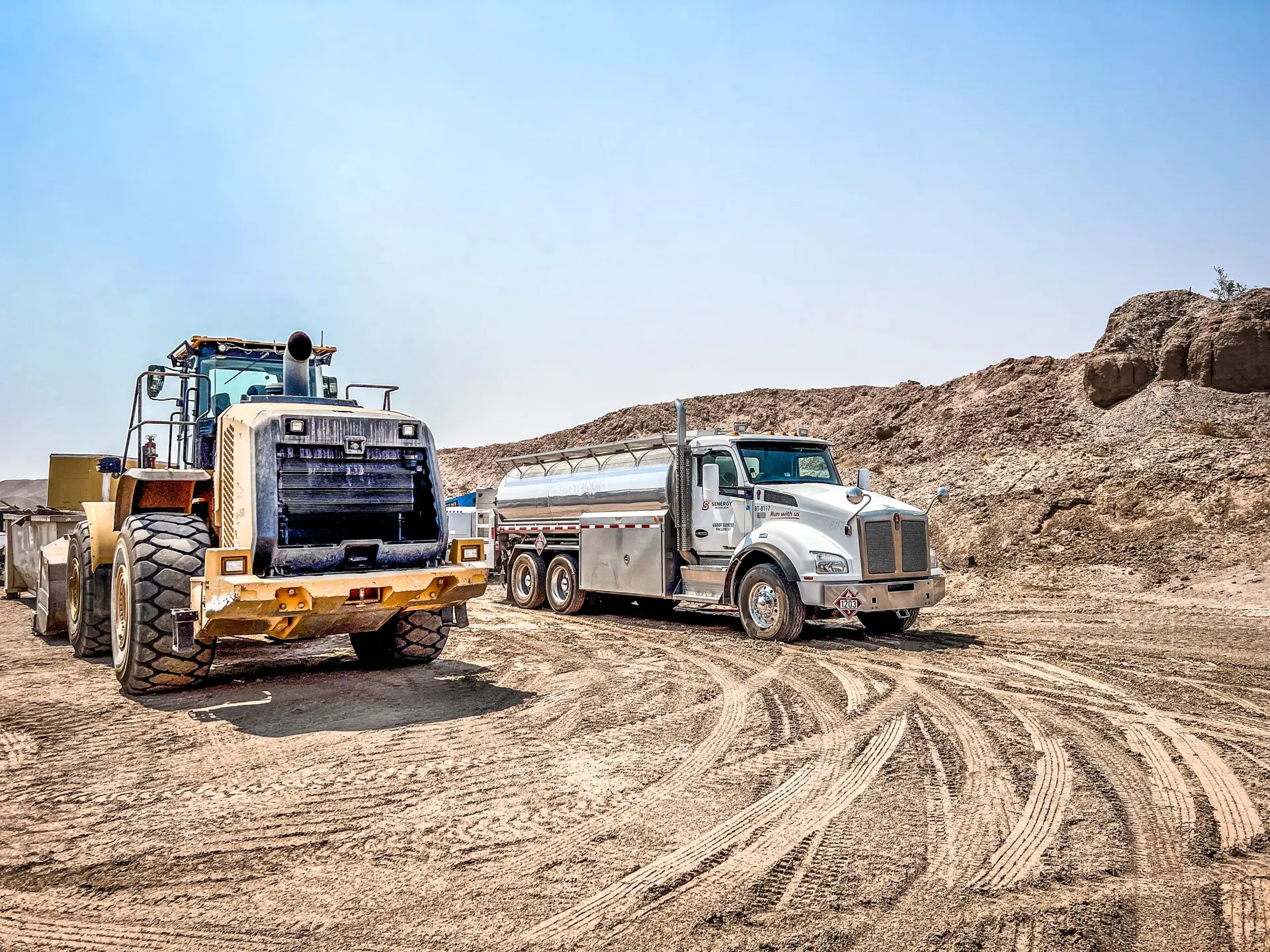
Diesel keeps a lot of industries moving—whether it’s fueling long-haul trucks, powering heavy equipment, or running day-to-day operations out in the field. But not all diesel is the same. There are two main types you’ll run into: clear diesel and dyed (red) diesel.
Although the red dye changes the fuel’s appearance, it does not affect combustion characteristics, cetane rating, lubricity, or sulfur content when both fuels meet the same ASTM D975 specification. Modern Ultra-Low Sulfur Diesel (ULSD) is commonly supplied as both clear and dyed diesel, allowing off-road equipment to meet current emissions requirements while still benefiting from tax-exempt fuel where permitted.
It is important to understand that equipment manufacturers generally do not distinguish between clear and dyed diesel from a performance standpoint. Instead, they specify fuel quality requirements such as cetane rating, sulfur content, water contamination limits, and cleanliness. Using clean, properly stored diesel often has a much greater impact on engine reliability than whether the fuel is dyed or clear.